Tesla Model Y: window-by-window
This service is not an official service of Tesla, Inc. or any film brand, and neither has reviewed or approved this article. The model name is used descriptively. What follows is general installation information — confirm what is actually possible with your installer.
From a tinting point of view the Model Y differs from a typical sedan in a few ways worth knowing before you talk to a shop.
There is a lot of glass
A tall SUV body with large windows and a glass roof means a lot of light enters the cabin. The same shade leaves the interior brighter than it would in a sedan, and conversely, going dark changes the feel more dramatically.
More area also means more cost and more difficulty. When you get a quote, check that it is itemised per window.
The all-glass roof
- Should the roof be tinted? According to the manufacturer, the roof glass already carries UV and infrared rejection, so many owners add nothing. Some still have it done for summer heat. Ask your installer about roof-specific product and warranty.
- In the preview the roof follows the windshield. Rather than splitting the car into five areas it is tied to the windshield, so darkening the windshield darkens the roof too. That is deliberate, not a glitch. The four areas you can control are windshield, front sides, rear sides and rear glass. (How to use the tint preview covers the controls.)
Rear glass — curvature and heat-forming
The hatch glass curves substantially across its width. Applying flat film to a compound curve requires heat-forming — shrinking the film to the shape before it goes on.
- Done properly it goes on as one piece with no seams.
- Otherwise it is cut into sections and the seams stay visible. Ask directly: "one piece?"
- Defroster lines run across the rear glass. Confirm they will not be damaged, and that they are covered by the warranty.
Windshield and sensors
- Driver-assistance cameras sit at the top of the windshield. The film must not obstruct their view — confirm how that area is handled.
- Metallic films can attenuate radio signals. If you use a windscreen-mounted transponder, see hue vs. reflectivity.
- If the windshield already has a dark gradient band along the top, ask how the overlap will be finished.
Combining the windows
There is no single right answer for a Model Y. But because the glass area is large, differences between windows are easy to see. A light windshield next to very dark rear glass shows a sharp step from the side.
Our preview shows front three-quarter, rear three-quarter and full side at once. The side view is where front-to-rear differences show most clearly — check that angle when you settle on a combination.
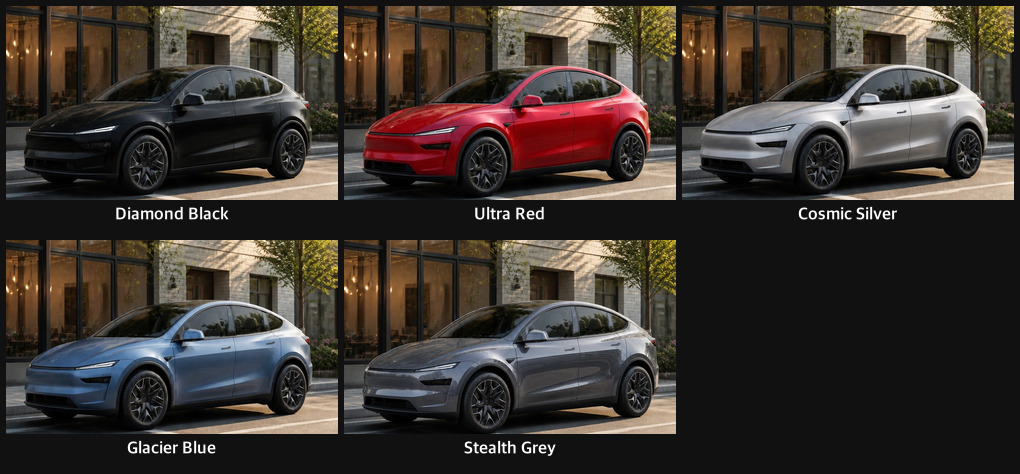
You can switch paint colour too. The same shade reads quite differently on a white car than on a black one.
See it yourself — tint preview →
More guides
- How to use the tint preview
Four windows, three axes, two rows of presets. Three minutes to the picture you want — and what the screen cannot show.
- How to choose a tint shade (VLT)
What 70, 50, 40, 30, 15 and 5 percent actually look like — and why the same film looks different in every photo.
- Tint VLT comparison: 70% to 5%
What each level looks like from outside and from inside, in one table — and why the numbers differ between countries.
- Korean window tint law, explained
Where the 70% windshield and 40% front-side limits come from, how they are measured, and which windows are unregulated.
- Hue vs. reflectivity
Charcoal, neutral, green, blue, bronze — and why colour and mirror finish tend to arrive together.
- Mirror tint: how it looks and whether it's legal
How reflective film works, what it actually looks like, and the legal points to check before you book.
- Before you book: a checklist
How to decide the per-window combination, and what to ask the installer.