Tint VLT comparison: 70% to 5%
What VLT means is covered in how to choose a tint shade. This page puts every level side by side so you can see what actually changes.
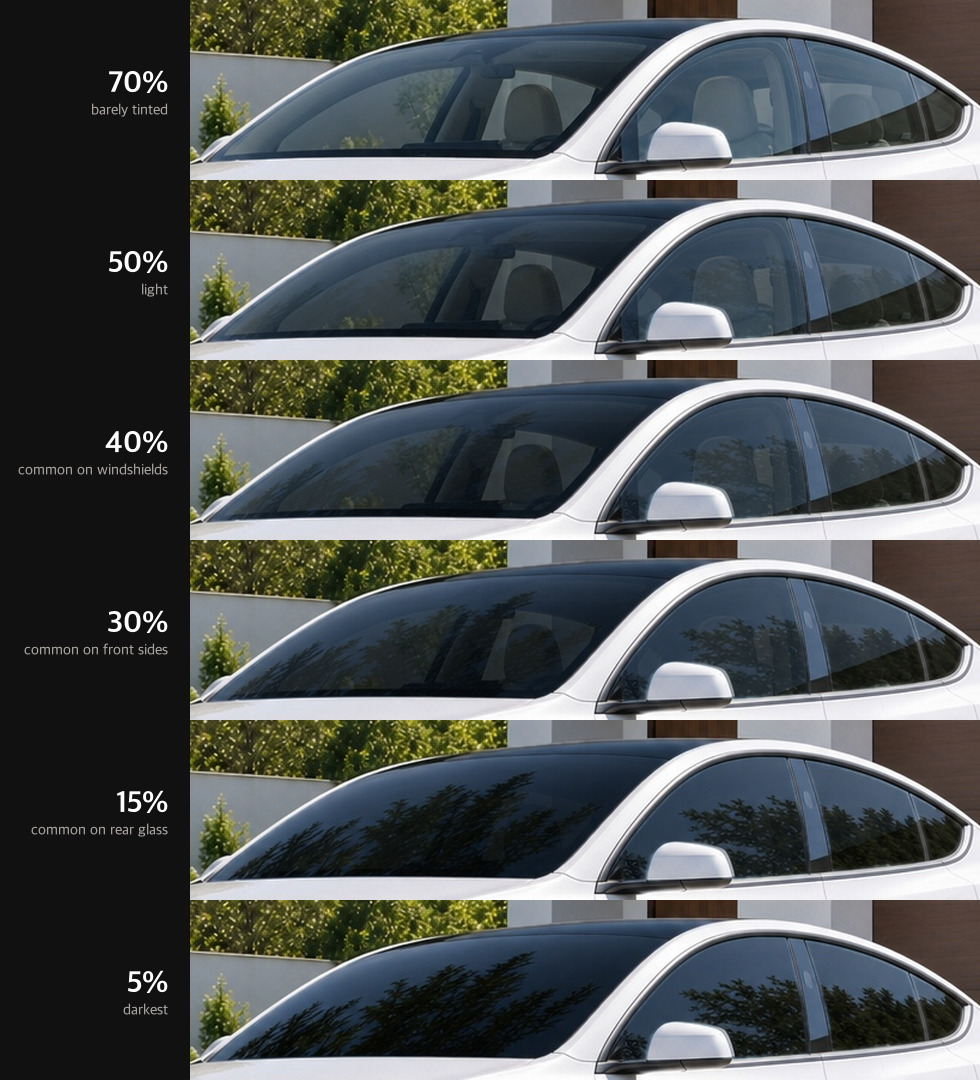
At a glance
| VLT | Looking in from outside | Looking out from inside | At night |
|---|---|---|---|
| 70% | Everything visible; barely looks tinted | No noticeable difference | No effect |
| 50% | People and objects clearly visible | Slightly dimmed | Barely any effect |
| 35–40% | Visible, but less conspicuous | Like wearing sunglasses | Slightly darker |
| 20–30% | Silhouettes by day; visible up close | Noticeable on overcast days | Mirror checks take more care |
| 15% | Almost nothing visible — mostly reflection | Fine by day, dark at night | Reversing and parking get harder |
| 5% | Nothing visible | Dark even in daylight | Rearward visibility drops sharply |
Treat this as a tendency, not a guarantee. The same number feels different depending on the glass itself, how light the interior is, and the light on the day. The four reasons are in how to choose a tint shade.
Why the numbers differ between countries
US listings usually run 70 · 50 · 35 · 20 · 5. Korean shops use 70 · 50 · 40 · 30 · 15 · 5. These are not different names for the same film — the levels actually stocked differ by market.
| US and similar | Korea | Difference |
|---|---|---|
| 70% | 70% | Same |
| 50% | 50% | Same |
| 35% | 40% | Hard to tell apart by eye |
| 20% | 30% or 15% | 20% is uncommon in Korea |
| 5% | 5% | Same |
So if you find a "35% install" photo and take it to a Korean shop, that exact figure may not exist there — you will be offered the nearest step. Side by side, the difference is very hard to see.
That is also why our preview uses 40 · 30 · 15: it matches what can actually be bought in the market the tool was built for.
What people actually combine
From our tally of 12 Korean installation reviews that listed shades per window:
| Window | Most common | Next |
|---|---|---|
| Windshield | 40% | 50% |
| Front sides | 30% | 15% |
| Rear sides | 15% | 30% |
| Rear glass | 15% | 30% |
The pattern is lighter at the front, darker at the back — vision and legal limits bite at the front, while the privacy motive is clearest at the rear.
Legal limits vary by country and by US state. The Korean figures are in Korean window tint law, explained; check the rules where you drive.
Your paint colour changes what you see
The same 15% reads differently on a different body colour. On a light car the contrast against the glass is high, so the tint looks darker; on a black car the glass and the paint run together and the same film stands out less.
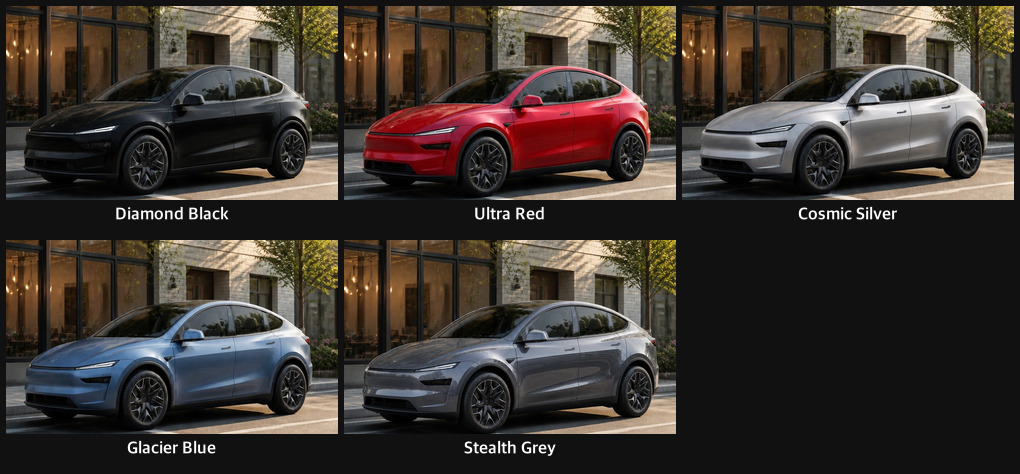
That is why someone else's installation photo is a poor guide — you have to put the film on your own colour to know what it will actually look like.
Compare with your eyes, not the number
A table only gets you so far. The same car, the same angle, the same light, with only the shade changing is far more useful. Shop photos vary in vehicle, lighting and editing, so they cannot be compared to each other.
See it yourself — tint preview →
More guides
- How to use the tint preview
Four windows, three axes, two rows of presets. Three minutes to the picture you want — and what the screen cannot show.
- How to choose a tint shade (VLT)
What 70, 50, 40, 30, 15 and 5 percent actually look like — and why the same film looks different in every photo.
- Korean window tint law, explained
Where the 70% windshield and 40% front-side limits come from, how they are measured, and which windows are unregulated.
- Hue vs. reflectivity
Charcoal, neutral, green, blue, bronze — and why colour and mirror finish tend to arrive together.
- Mirror tint: how it looks and whether it's legal
How reflective film works, what it actually looks like, and the legal points to check before you book.
- Before you book: a checklist
How to decide the per-window combination, and what to ask the installer.
- Tesla Model Y: window-by-window
Large glass area, an all-glass roof, heat-formed curves — what to watch for on a Model Y.